

READING A LABEL
Extension-safe products are easy to spot once you know what you're looking for.
Look for: hydrating · moisturizing · nourishing · smoothing · sulfate-free · protein-free
Avoid: bonding · repairing · strengthening · restructuring · fortifying · sulfates · clarifying (except as directed below)

BONDING & REPAIR PRODUCTS ARE OFF-LIMITS
Products like bond builders, protein treatments, and repair masks are designed for hair that is still attached to your head and still growing. Extensions are not. These products are protein-based, and protein has nowhere to go on an extension — so it deposits, layer after layer, until the hair becomes over-proteinized.
Over-proteinized hair doesn't look repaired. It looks brittle. It snaps at the ends, dries out prematurely, tangles at the root, and loses its shine. It is one of the most common causes of extension failure we see, and it is completely preventable.
The same goes for sulfates. Sulfates are aggressive detergents that strip moisture and lift the cuticle. On your natural hair, your scalp compensates. On extensions, nothing does — so the damage is cumulative and permanent.

THE FIRST 48 HOURS
This window matters more than any other, and it's the one most often missed.
For keratin tips and tape-ins: no shampooing, no swimming, no hot yoga, no workouts that cause heavy sweating — for a full 48 hours after installation. The bond or adhesive is still curing during this time. Moisture introduced too early interferes with the cure and leads to slipping, shedding, and premature loss.
For all methods: Micro-wefts & hand-tied hair can be shampooed on day 1 if needed,

SUN, SAND & WATER
Chlorine and salt water are extremely damaging to extensions. Both strip moisture, alter tone, and can cause irreversible dryness and matting.
If you're heading to the pool or ocean:
- Wear your hair up and out of the water whenever possible.
- Saturate your hair with clean water and apply a leave-in conditioner before getting in. Hair that's already full of clean water absorbs less chlorine and salt.
- Rinse thoroughly and wash immediately afterward.
Sunscreen will stain your extensions. Chemical sunscreens contain avobenzone and octocrylene, which cause a pinky-orange discoloration in hair extensions. Blondes are the most vulnerable, but brunettes will see a shift too — and once it happens, it's very difficult to correct.
Use mineral-based sunscreen only. We love coola sunscreen.
Also worth knowing: self-tanner, sweat, and hard water all contribute to discoloration over time. A sunhat during long sun exposure protects both your color and your investment.

CARE BY METHOD
The fundamentals above apply to every method. These are the specifics.
Micro-Wefts
Our micro-wefts are built with a reinforced seam and can be cut anywhere along the weft without shedding — that's the whole point of them.
- Keep direct flat iron heat off the seam itself. The seam is reinforced, but repeated direct heat will compromise it over time.
- Brush below the seam, holding above it.
Hand-Tied Wefts
Hand-tied wefts have a knot at either end of the seam. These knots hold the entire weft together and must remain completely undisturbed.
- Hand-tied wefts cannot be cut anywhere along the seam. Cutting will release the knots and cause the weft to shed.
- Never brush across the seam. The bristles can damage the delicate hand-tied construction.
- Dry the seams fully. Hand-tied wefts left to air-dry will cause the seams to swell and can cause scalp chafing and irritation.
Keratin Tips
- 48 hours before your first wash. No exceptions. No sweating, no swimming.
- Keep conditioner, oils, masks, and leave-ins away from the bonds entirely. Anything oily at the bond will cause it to slip.
- Matting and Tangling at the Bond
- If two or more bonds start tangling together above the keratin bond, gently separate them with your fingers before it spreads. If they won’t come apart easily, see your stylist to have it assessed.
- You naturally shed 100 to 150 hairs a day, and that doesn’t stop with extensions in. That shed hair just can’t fall into your brush the way it normally would, so it stays behind and wraps around neighboring bonds.
- Brushing twice daily with your detangling brush keeps that shed hair moving downward instead of getting tangled with neighboring bonds shed. Expect to need more diligence after the two month mark, when more shed hair has built up. Staying consistent from day one is what prevents matting later.
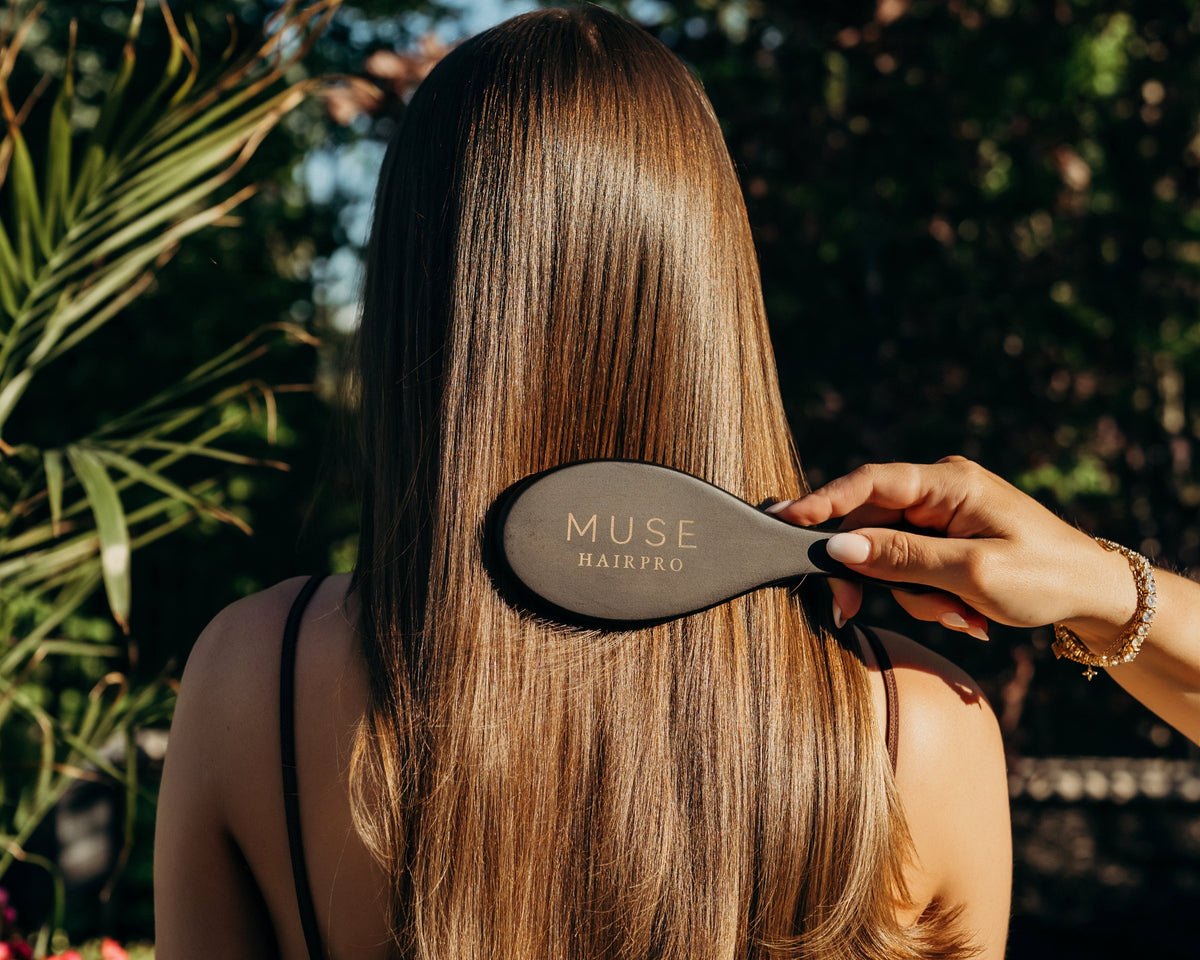
- Brush above the bonds twice a day with your Muse Boar Bristle Brush
- Some shedding is normal. Up to about 10% across the full wear cycle is expected, with most of it occurring in the first day or two while the bonds finish curing.
- Dry the bond area completely after every wash.
Tape-Ins
- 48 hours before your first wash. The adhesive is still curing.
- Absolutely no conditioner, oil, mask, or leave-in at the root. Tape adhesive and oil are incompatible — this is the number one cause of tape-ins slipping early.
- Never air-dry. Moisture trapped between the tape tabs breaks the adhesive down. Dry the root thoroughly, every single time.
- No direct heat on the tape tabs.
Clip-Ins
- Remove your clip-ins before sleeping, showering, and swimming. Always.
- Brush from the ends up before and after each wear.
- Wash only every 10-15 wears — clip-ins aren't exposed to scalp oil, so they need far less cleansing than installed hair.
- Store them flat or hanging, never crumpled in a drawer.
MAINTENANCE
LIFESPAN
WHAT'S NORMAL ( & WHAT ISN'T)
Normal:
- A small amount of shedding, particularly in the first few days
- Slightly less density at the very ends over time
- Needing a gloss or toner refresh every few months
- Your natural hair shedding during re-install appointments — you lose 50–100 strands a day naturally, and with extensions they have nowhere to fall out to
Not normal — reach out to your stylist:
- Shedding coming directly from a seam
- A bond or tape tab releasing entirely
- Sudden matting at the root
- Rapid, dramatic dryness or breakage
A quick way to tell if its your hair shedding or the extension hair: look at the root end of a shed strand. If there's a small white bulb, that's your own natural hair completing its normal cycle. No bulb means it came from the extension.

WHAT WE RECOMMEND

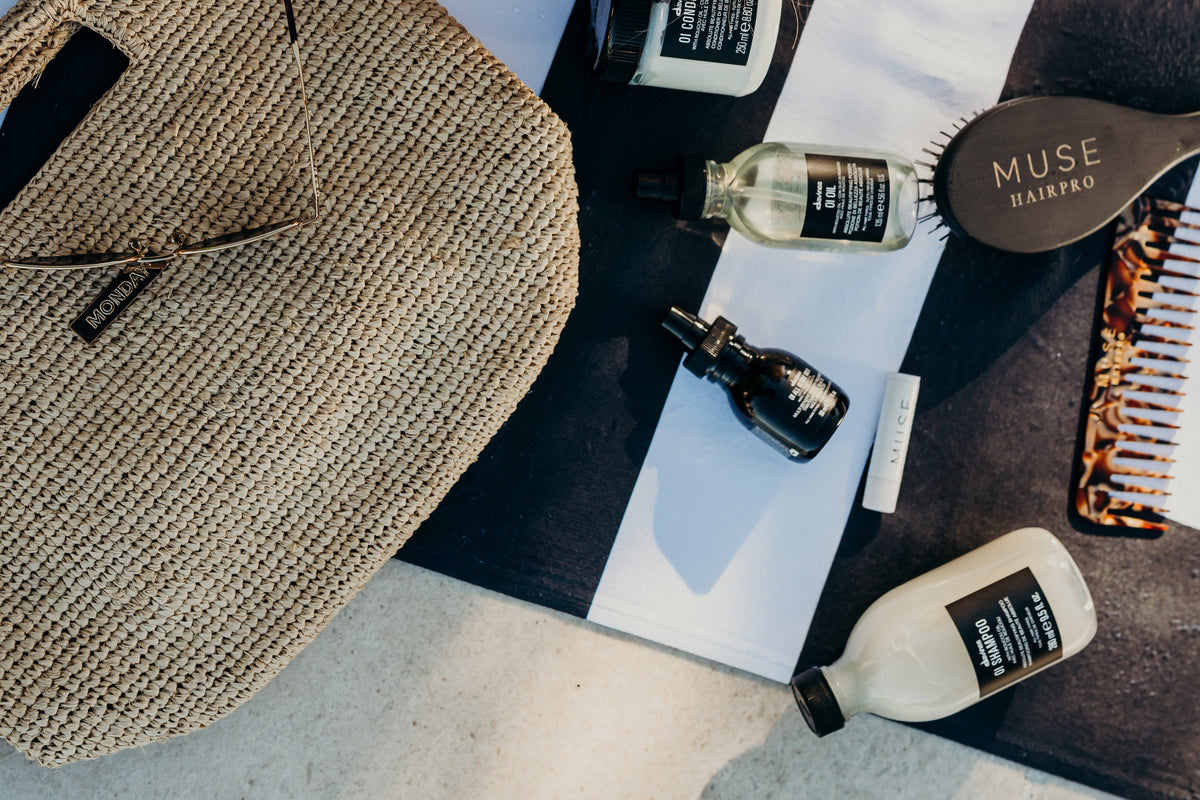
Davines OI
Sulfate-free, protein-free, deeply moisturizing. Our go-to line for extensions.
- OI Shampoo
- OI Conditioner
- OI All-in-One Milk
- OI Leave-In Oil
Davines SOLU
Gentle clarifying shampoo, once a month maximum
AquaBliss Shower Filter
For hard or well water
Coola Mineral Sunscreen
Mineral sunscreen that won't discolor your hair
Muse HairPro Detangle Brush
Built specifically for the mids to ends of your extensions.
